
How Do I Get My Dingy Grout Lines White Again?
- Scott Thomas

- Jun 5
- 8 min read
If you are asking, how do I get my dingy grout lines white again, you are past easy stage. You scrubbed, rinsed, tried a cleaner from under the sink, and the tile still looks tired because the grout lines stay gray.
White grout often improves with the right process, but not every dingy grout line is dirty. Some grout is holding soil. Some is stained by minerals, soap residue, mildew, or old sealer. Some grout has failed and needs repair, color sealing, or replacement.
That distinction matters. The wrong cleaner can dull stone, weaken sealer, or drive dirty water deeper into the joint. Olson Marble & Stone Care helps San Jose and Bay Area homeowners choose the right fix.
Why White Grout Turns Dingy in the First Place
White grout is porous and slightly textured. It collects soil from shoes, mop water, soap film, body oils, cooking grease, hard-water minerals, and cleaner residue. Once those materials settle into the joint, the tile looks older.
This is why a freshly mopped floor can still look dirty. The grout lines create the grid your eye notices first. Gray grout lines make expensive tile look neglected.
In San Jose, Los Gatos, Saratoga, Palo Alto, and nearby Bay Area homes, grout problems change by room. Kitchens collect grease and mop residue. Bathrooms collect soap film, moisture, and mildew staining. Entryways collect abrasive grit. Outdoor tile and concrete-adjacent areas deal with soil, drainage, and minerals.
Surface Dirt, Soap Film, and Mop Residue
Foot traffic carries fine soil into grout joints. Mopping makes this worse when dirty water settles into the lowest point, often the grout line. Soap film adds another shower problem. Body wash, shampoo, conditioner, and hard water combine into a sticky residue. That residue holds soil and gives mildew a place to return.
Hard Water, Bathroom Moisture, and Mildew Staining
Bathroom grout is harder to keep white because moisture keeps feeding the problem. The EPA explains mold control starts with moisture control, and mold on hard surfaces should be scrubbed with detergent and water, then dried. See the EPA mold cleanup guidance.
Hard water adds another layer. Mineral deposits leave chalky residue. Soap scum bonds to those minerals. Mildew darkens grout corners where air movement is poor. If a shower lacks ventilation or stays wet for hours, dark lines come back after cleaning.
Can Dingy Grout Lines Really Become White Again?
Yes, dingy grout can often become white again when the problem is surface soil, soap film, or light organic staining. But if stains have soaked deep into the grout, if a topical sealer has failed, or if the grout is cracked, missing, or powdery, cleaning alone will not restore a clean white appearance.
This is where many DIY articles mislead homeowners. They treat all grout discoloration like the same problem. A gray kitchen traffic lane is different from black shower corners or brown outdoor grout. You need to know whether the grout is dirty, stained, sealed incorrectly, or failing.
When Cleaning Works
Cleaning works best when the grout is structurally sound and the discoloration is near the surface. Recent dirt, soap film, light grease, and mild residue often respond to the right cleaner, controlled agitation, thorough rinsing, and drying.
The safest first step is a pH-neutral cleaner, especially near natural stone. If your tile installation includes marble, travertine, limestone, terrazzo, or other calcium-based stone, aggressive cleaners create risk. Olson’s natural stone restoration services are built around surface judgment.
When Cleaning Is Not Enough
Cleaning is not enough when the grout has permanent staining or physical damage. Warning signs include cracked joints, missing grout, powdery grout, dark lines that never lighten, or stains that return quickly.
Use extra caution around engineered stone, quartz surfaces, and adjacent countertops. Some cleaners used on floors or showers do not belong near premium surfaces. If your grout problem sits near quartz or engineered stone, Olson’s quartz and engineered stone services give the work a safer path.
Safe DIY Methods to Try Before Calling a Professional
Some grout can be cleaned safely at home. The key is knowing when to stop.
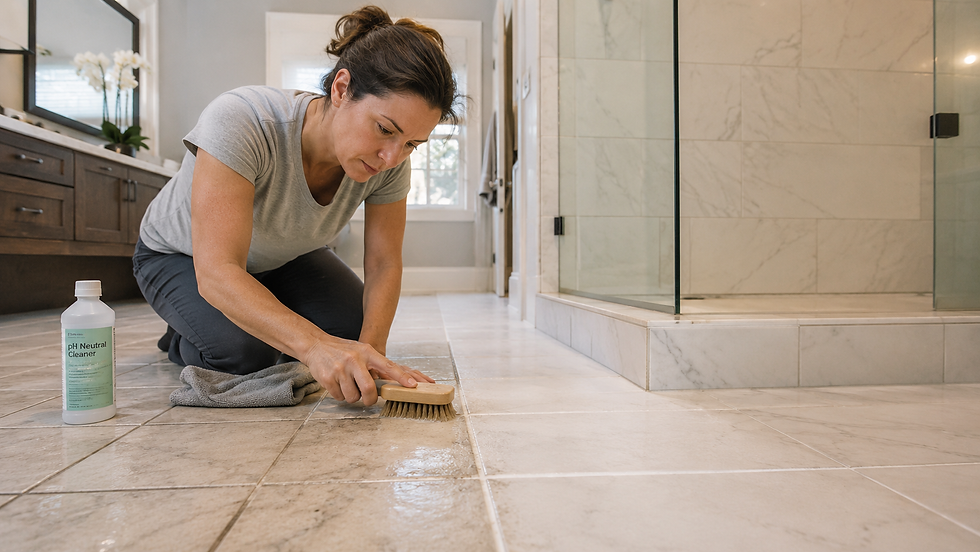
Start with the least aggressive method. Use a pH-neutral cleaner, warm water, a soft nylon brush, and a microfiber towel. Work in small sections. Rinse well. Remove as much dirty water as possible, then judge the result after it dries.
For light organic stains, oxygen bleach or peroxide-based cleaners may help. Follow the label, test first, avoid mixing chemicals, then rinse and dry.
LATICRETE recommends pH-neutral cleaners for routine grout care and specialty products for grease, soap scum, or mold instead of one harsh cleaner for everything: LATICRETE cement grout care.
Be Careful With Vinegar, Acidic Cleaners, and Abrasive Tools
Vinegar is repeated online as if it solves every grout problem. It does not. Acidic cleaners can harm marble, limestone, travertine, and other calcium-based stone. They can also weaken some sealers over time.
Abrasive pads can scratch soft stone, roughen grout, and make the joint hold more soil later. Toilet bowl cleaner is too aggressive for tile and grout maintenance. The IICRC warns that acidic or alkaline cleaners can degrade grout sealer over time and leave residue that attracts soil: IICRC tile, stone, and grout care information.
Why Professional Grout Cleaning Gets Better Results
Professional grout cleaning works better because it treats the whole problem. It is not only cleaner. It is controlled chemistry, agitation, heat, pressure, rinsing, and extraction.
The Tile Council of North America says the best way to clean grout is to apply cleaner, vacuum out dirty water, rinse, and vacuum again because this lifts dirt and soap film from the joint. See the TCNA guidance here: TCNA cleaning grout resource.
This is the trust-building point. Professional work costs more because it protects more. Olson is not guessing with a bottle of cleaner. The process starts by identifying tile type, grout type, sealer condition, stain class, and cleaner safety.
Professional Cleaning Removes Dirty Water Instead of Spreading It
Most homeowners loosen soil but fail to remove it. A brush breaks residue free. Mop water carries it around. Then the dirty solution settles back into the grout joint.
Professional cleaning is different. The goal is to suspend and extract soil. On appropriate tile and grout, professional equipment can pair agitation with hot-water extraction or steam-style cleaning. The value is removal.
Olson Evaluates the Whole Surface System
Grout does not exist alone. It sits between tile, stone, thresholds, counters, baseboards, shower glass, drains, and sometimes concrete transitions. A cleaner safe for one material may be wrong for another.
That is where Olson Marble & Stone Care stands apart. Olson works across stone restoration, tile and grout restoration, concrete services, power washing, carpet, upholstery, and hard surface care.
When to Choose Sealing, Color Sealing, or Regrouting
Some grout needs cleaning. Some needs protection. Some needs a cosmetic reset. Some needs replacement. The right choice depends on the joint.
This is the value moment. Buying cleaner after cleaner gets expensive and still leaves the room looking tired. Replacing tile when only the grout needs help is also wasteful.
Sealer helps clean grout resist future staining. It does not make grout stain-proof. It works best after professional cleaning, not over embedded soil. Sealing dirty grout traps the problem.
Color Sealing Works When Stains Are Permanent but Grout Is Stable
Color sealing can be a smart middle step when grout is structurally sound but permanently stained. Prep matters. The grout has to be cleaned, rinsed, dried, and evaluated before color seal can bond well.
For high-end stone surfaces, protection needs to match the surface and use. Olson’s AntiEtch protective surface service fits a different category, but the principle is the same: surface protection only works when the substrate is prepared correctly.
Regrouting Makes Sense When the Grout Is Cracked, Missing, or Failing
Regrouting is the right call when the joint has failed. If grout is cracked, loose, missing, or powdery, cleaning will not solve the problem. More water and more brushing may make it worse.
In showers, failed grout can allow moisture behind the tile assembly. In floors, broken grout can collect grit and speed up wear along tile edges. If the grout is damaged, the honest answer is repair or replacement, not another round of cleaner.
How Olson Restores Dingy Grout Lines in San Jose and the Bay Area

Olson’s role is to give you the right fix, not the most dramatic one. Some grout needs deep cleaning. Some needs sealing. Some needs color sealing. Some needs repair. Some should be replaced.
The process starts with surface identification. Is the tile ceramic, porcelain, marble, travertine, limestone, terrazzo, granite, or another stone? Is the grout cement-based or epoxy? Is there a sealer? Is the discoloration soil, mineral, mildew staining, dye, rust, or coating failure?
That diagnosis controls the method. Olson can choose safer chemistry, controlled agitation, rinsing, extraction, and protection.
Outdoor tile and concrete-adjacent surfaces bring another set of issues. Patios, entries, pool areas, and walkways face soil, irrigation overspray, drainage, and minerals. Olson’s concrete services support exterior and transition areas where surface wear, coating condition, and drainage matter.
If your grout stays gray after scrubbing, stains return quickly, or you see cracked joints, it is time for professional judgment. You can contact Olson Marble & Stone Care to schedule an inspection before repeated DIY cleaning causes more damage.
Conclusion: Get the Right Fix Before You Keep Scrubbing
Dingy white grout is not always a cleaning failure. It may be surface soil, soap residue, hard-water minerals, mildew staining, failed sealer, or damaged grout. Each problem needs a different fix.
You can try a safe pH-neutral cleaner, soft brush, careful rinse, and full drying. If the grout still looks gray, do not keep escalating to harsher products. That is how stone gets etched and sealers fail.
Olson Marble & Stone Care restores tile, grout, stone, concrete, and other high-end surfaces throughout San Jose and the Bay Area. If your grout will not come back to white, ask Olson to inspect it and recommend the right path: professional cleaning, sealing, color sealing, repair, or regrouting.
FAQ
What is the best way to get white grout white again?
Start with a pH-neutral cleaner, a soft brush, careful rinsing, and full drying. If the grout stays gray, the problem may be deep staining, failed sealer, mildew staining, or damaged grout. Professional cleaning removes more soil because it extracts dirty solution from the joint.
Why does my grout still look dirty after I scrub it?
Grout often stays dirty because scrubbing loosens soil but does not remove dirty water from the joint. Once that slurry dries, the grout looks gray again. Deep stains, sealer failure, hard-water minerals, and damaged grout also resist normal scrubbing.
Is vinegar safe for cleaning grout?
Vinegar is not always safe. It can damage marble, limestone, travertine, and other calcium-based stone near grout lines. It can also weaken some sealers over time. Use a surface-safe cleaner first, especially if you do not know the tile or stone type.
Can professional cleaning make stained grout white again?
Professional cleaning can make grout much brighter when the problem is soil, soap film, light staining, or residue. If stains have penetrated deeply or the grout is damaged, color sealing or regrouting may be needed.
When should stained grout be replaced instead of cleaned?
Grout should be replaced when it is cracked, missing, powdery, loose, or allowing moisture behind tile. Cleaning damaged grout wastes time and can worsen moisture problems. A professional inspection helps confirm whether cleaning, sealing, color sealing, or regrouting makes the most sense.


