
Can My Existing Concrete Floor Be Polished, or Is It Too Damaged?

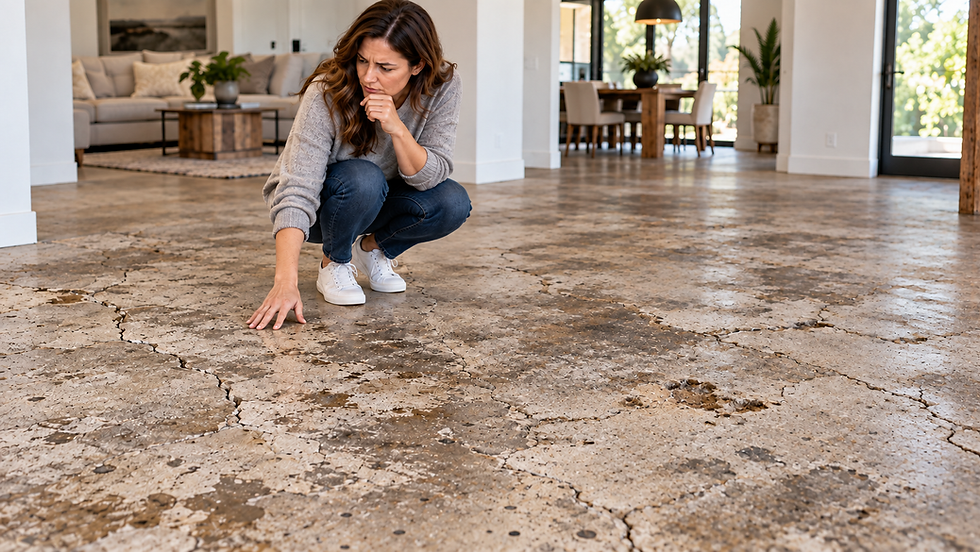
A lot of older concrete looks worse than it really is. Cracks, stains, patches, tack-strip holes, worn coatings, and years of traffic can make a slab look like a poor candidate for restoration. In many cases, though, the answer to can an existing concrete floor be polished is yes.
The more important question is whether polishing will produce a floor you will actually like.
Concrete polishing refines the existing slab rather than hiding it. Some repairs, stains, aggregate variation, and previous damage can remain visible after grinding and polishing. Before work begins, the slab should be evaluated for stability, surface strength, cracking, pitting, spalling, coatings, contamination, flatness, and previous repairs.
For property owners in San Jose and throughout the Greater Bay Area, that evaluation can determine whether polishing, repair, resurfacing, or another concrete treatment makes more sense.
What Makes an Existing Concrete Floor a Good Candidate for Polishing?
A concrete floor does not need to be new or visually perfect to be polished. What matters most is whether the slab is reasonably sound and stable.
Normal wear, scratches, dullness, minor cracking, old adhesive, small pits, and previous floor coverings do not automatically rule out polishing. Older concrete can sometimes be a good candidate because the slab has already been in service long enough for its condition to become apparent.
The visible surface can also be misleading. A dirty, stained slab may still be structurally suitable. A cleaner-looking slab can have movement, weak surface concrete, or extensive repairs that make polishing less attractive.
This is why Olson's concrete polishing and restoration services begin with evaluating the condition of the existing slab before a finish is chosen.
Age Alone Does Not Determine Whether Concrete Can Be Polished
There is no simple age cutoff for concrete polishing. An older slab that is dense, stable, and reasonably uniform may polish well. A newer slab with weak surface concrete, serious cracking, or extensive damage may require more preparation or another treatment.
Structural Condition Matters More Than Surface Appearance
Polishing improves the surface. It does not correct settlement, heaving, ongoing movement, or other structural problems. If cracks show displacement or appear to be changing, those conditions need to be understood before grinding begins.
Which Types of Concrete Damage Can Usually Be Repaired Before Polishing?
A crack or damaged area does not automatically mean the entire slab is a bad candidate. Many defects can be repaired before or during polishing when the surrounding concrete is sound.
Common repairable conditions can include stable cracks, small pits, localized spalls, tack-strip holes, minor chips, and isolated surface damage. The exact repair approach depends on the defect and on the appearance you expect from the finished floor.
The Concrete Polishing Council recognizes that polished floors may require repairs to cracks, spalls, pinholes, scratches, and other defects. Repair material and technique can affect the final appearance.
Cracks Do Not Automatically Mean the Floor Cannot Be Polished
A stable crack can often be cleaned, prepared, and filled. A filled crack may remain visible after polishing, especially when the repair material differs in color or texture from the surrounding concrete.
That is different from a crack associated with ongoing movement. If the sides are moving independently or one side is higher, polishing the surface does not solve the underlying problem.
Pits, Holes, and Small Spalled Areas May Be Repairable
Small damaged areas can often be patched before refinement continues. If deterioration is widespread, however, the floor can begin to look more like a collection of patches than one continuous slab.
The International Concrete Repair Institute defines concrete deterioration to include conditions such as cracking, pitting, scaling, and spalling. The extent matters. Localized deterioration and widespread material loss are not the same problem.
A repaired slab can be durable and functional while still showing visible evidence of its history.
When Is a Concrete Floor Too Damaged to Polish Successfully?
There is no single defect that answers this question. The decision depends on how much damage is present, whether the slab is stable, how much repair is required, and what appearance you expect.
A floor becomes a weaker polishing candidate when it has widespread spalling, severe scaling, soft or friable surface concrete, extensive patchwork, major unevenness, significant contamination, or evidence of ongoing slab movement.
If the surface is flaking or breaking apart, Olson's guide to concrete spalling repair in San Jose explains the distinction between ordinary surface wear and more significant deterioration.
Active Movement Is Different From a Cosmetic Crack
Polishing is not a structural repair system. Settlement, heaving, displacement, or continuing movement can cause repaired cracks to reopen or create height differences that remain visible.
If a condition suggests a structural issue rather than ordinary surface wear, it should be evaluated before a decorative finish is selected.
Weak Concrete Can Affect Grinding, Aggregate, and Gloss
Weak surface concrete can behave poorly during polishing. The Concrete Polishing Council notes that weak surfaces can contribute to aggregate rollout, lower gloss, and reduced service life. Its guidance also discusses Mohs surface-hardness testing and densifiers as possible parts of evaluation or remediation.
For a homeowner, the practical point is simple. A densifier is not a guaranteed fix for every weak slab. The Concrete Polishing Council specifically notes that the effectiveness of densification can vary with the condition of the concrete.
Too Many Repairs Can Change the Economics and Appearance
A floor can be technically repairable and still be a poor polishing choice.
If large areas require patching, the repairs may remain obvious. If the owner wants a highly uniform finish, resurfacing, a coating system, or another treatment may make more sense.
That distinction between what is possible and what is advisable is a major part of a professional evaluation.
What If the Concrete Is Covered With Tile, Carpet, Paint, or Epoxy?
Existing floor coverings do not automatically prevent polishing. The real issue is what is underneath them.
When tile, carpet, vinyl, paint, epoxy, or another coating is removed, the slab may reveal adhesive, thinset, tack-strip holes, stains, plumbing patches, previous crack repairs, hidden spalling, or differences in surface texture.
Removing the Old Floor May Reveal Problems You Could Not See Before
An initial estimate sometimes needs to be adjusted once the surface is exposed. A contractor can inspect what is visible, but nobody should promise that a covered slab is flawless underneath.
A test area can sometimes help determine how coatings, adhesive, or concrete respond to mechanical preparation.
Grinding Can Remove Surface Materials, but Not Every Mark Disappears
Mechanical grinding can remove many coatings, residues, and surface contaminants. It does not guarantee that deep staining, tile-grid ghosting, old patches, or discoloration will disappear completely.
During service, expect professional grinding equipment, edge work, controlled access, noise, and dust-management procedures. Furniture and stored items normally need to be removed so the floor can be treated consistently.
The goal is to create the best practical finished surface from the slab that is actually there.
How a Professional Determines Whether Your Concrete Should Be Polished

A good concrete evaluation is more than looking at a few cracks and deciding whether they can be filled. The contractor needs to connect slab condition with your desired finish.
The floor should be inspected for crack patterns, displacement, movement, previous repairs, pits, spalls, scaling, weak areas, coatings, adhesives, stains, and contamination.
Flatness matters too. High and low areas can grind differently. More material may be removed from high spots, which can expose more aggregate in one area than another. The Concrete Polishing Council's aggregate exposure guidance recognizes that slab characteristics and flatness influence the appearance achieved through grinding and polishing.
That variation may fit an industrial or character-rich floor but disappoint someone expecting a uniform appearance.
Surface strength matters because polishing depends on progressively refining the concrete. Weak areas can create inconsistent results.
Finally, the contractor should ask what you want the finished floor to look like. Visible patches, filled cracks, aggregate variation, and old slab markings can become part of the finished appearance. Some clients like that character. Others want a cleaner, more uniform look.
A professional recommendation should consider both the condition of the concrete and your expectations.
What Are the Alternatives If Your Floor Is Not a Good Polishing Candidate?
If polishing is not the best option, that does not automatically mean the slab needs to be demolished.
Depending on its condition, alternatives may include localized repair, resurfacing, staining and sealing, a grind-and-seal system, a compatible overlay, or another protective coating. Olson's guide to resurfacing versus replacing concrete can help explain when keeping the existing slab may still be practical.
If extensive patching would remain visually obvious, resurfacing may provide a more uniform appearance. If the slab is structurally sound but the owner wants a different decorative finish, staining and sealing or another coating system may be appropriate.
If the slab has serious movement or structural deterioration, cosmetic surface work should not be used to hide it.
The better sequence is inspection first, treatment decision second.
Can Your Existing Concrete Floor Be Polished?
In many cases, yes. Existing concrete can often be polished even when it has years of wear, minor cracks, stains, pits, old coatings, or previous repairs.
The deciding factors are whether the slab is stable, whether damaged areas can be repaired, how much patching is required, how the concrete responds to grinding, and whether the finished appearance will meet your expectations.
Polishing does not cover the history of the slab. It refines and exposes it. Crack repairs, patching, aggregate variation, staining, and previous floor patterns may remain visible.
If you have an existing concrete floor in San Jose or elsewhere in the Greater Bay Area, Olson Marble & Stone Care can inspect the slab and explain whether polishing, repair, resurfacing, staining and sealing, or another concrete treatment makes the most sense. You can contact Olson Marble & Stone Care to schedule an evaluation.
Frequently Asked Questions
Can old concrete floors be polished?
Yes, many older concrete floors can be polished if the slab is stable and the surface is suitable for mechanical refinement. Age matters less than cracking, deterioration, previous repairs, contamination, and surface strength.
Can concrete with cracks still be polished?
Often, yes. Stable cracks can frequently be repaired before or during polishing, but the repair may remain visible. Cracks associated with movement, settlement, or displacement need more careful evaluation because polishing will not correct the underlying cause.
Can concrete be polished after tile or carpet is removed?
Yes, provided the exposed slab is a suitable candidate. Removal can reveal thinset, adhesive, tack-strip holes, stains, hidden cracks, or patches that require additional preparation before polishing.
Will polishing remove stains and old patches from concrete?
Not always. Grinding can remove some surface contamination and staining, but deeper discoloration and old patches may remain visible. A professional should explain those limitations before the finish is selected.
What happens if my concrete is too damaged to polish?
Other options may include repair, resurfacing, staining and sealing, a grind-and-seal system, an overlay, or another coating. If the damage involves structural movement or serious deterioration, that issue should be addressed before choosing a decorative finish.


