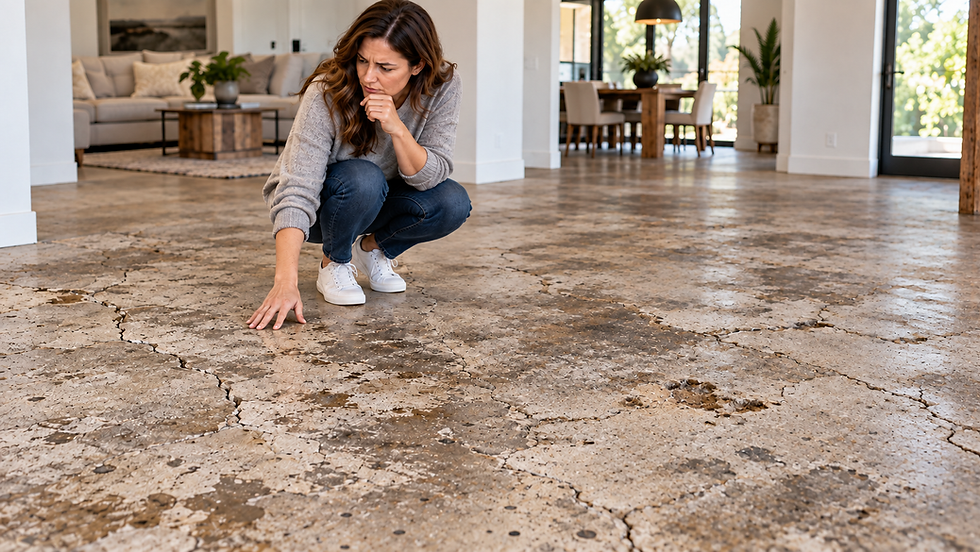
Can Old Terrazzo Floors Be Restored Without Replacing Them?


Yes. Many old terrazzo floors can be restored without tearing them out, even when they look dull, scratched, stained, chipped, or cracked. The deciding factor is usually not the age of the floor. It is the condition of the terrazzo, the type of system, and what is happening beneath the visible surface.
Professional terrazzo floor restoration may involve cleaning, localized repairs, removal of old coatings, grinding or honing, polishing, and sealing when appropriate. In some cases, only a damaged section needs to be replaced.
The important part is diagnosis. A floor that looks terrible may still be a strong restoration candidate. A floor that looks reasonably good may have movement, delamination, or substrate problems that make the repair more complicated.
How Do You Know Whether an Old Terrazzo Floor Can Be Restored?
The Surface Can Look Worse Than the Floor Actually Is
Terrazzo can lose clarity and sheen after years of foot traffic, abrasive soil, scratches, old maintenance products, and previous coatings. That can make the floor look exhausted even when the terrazzo itself remains serviceable.
A worn surface is very different from a failing floor.
If the damage is primarily at or near the surface, a restoration contractor may be able to mechanically refine the terrazzo and bring back a smooth, consistent finish. That does not mean every dull floor needs aggressive grinding. The amount of material removed should depend on the condition of the floor and the finish you are trying to achieve.
This is one reason an older terrazzo floor should be evaluated before anyone assumes replacement is necessary.
A Professional Looks Beyond Shine and Scratches
Before deciding whether to restore or replace terrazzo, a professional may evaluate:
whether the terrazzo is cementitious or epoxy based
the pattern and stability of cracks
chips, voids, and missing areas
previous repairs
divider strips
stains and discoloration
old waxes, coatings, or adhesive residue
possible loose or delaminated areas
signs of movement in the substrate
The U.S. General Services Administration's historic terrazzo restoration specification follows the same basic diagnostic approach. It calls for identifying the existing terrazzo system, assessing problem areas, and classifying cracks before deciding whether they should be repaired or the affected terrazzo replaced. The specification is written for historic federal projects, so its exact procedures should not be treated as a universal recipe for every residential floor. U.S. General Services Administration
That is why an on-site assessment matters. The visible problem may be only part of the story.
What Types of Terrazzo Damage Can Usually Be Restored?
Dullness, Scratches, and Worn Traffic Areas
Dull terrazzo is one of the clearest examples of a floor that may look worse than it really is.
Years of traffic can leave entryways, hallways, kitchens, commercial corridors, and other heavily used areas noticeably flatter or hazier than the surrounding floor. Surface scratches can also scatter light and make terrazzo look dirty even after cleaning.
Professional restoration may use grinding, honing, or polishing to refine the worn surface. The exact process depends on how deep the damage is, the terrazzo system, previous treatments, and the desired final sheen.
This is different from simply applying a topical product that makes the floor look shiny for a while. The goal is to correct the surface itself.
Cracks, Chips, and Small Missing Areas
A crack does not automatically mean the entire terrazzo floor needs to come out.
The National Terrazzo & Mosaic Association recommends investigating why a crack formed before deciding how to repair it. If the underlying concrete or another part of the assembly continues to move, filling the visible crack without addressing the cause can allow the crack to open again. NTMA's terrazzo crack-repair guidance specifically discusses investigating movement, settlement, shrinkage, and other possible causes before choosing a repair method. NTMA
Stable cracks, chips, voids, and localized missing terrazzo may be repairable. In more damaged sections, a contractor may remove and replace a limited area rather than replace the entire floor.
This is where expectations matter. Matching a decades-old floor can be difficult because the original aggregate, matrix color, and materials may no longer be available. NTMA notes that natural aggregate sources can change over time, making an exact match difficult on an older floor. NTMA
A good repair can blend well with the existing terrazzo without being completely invisible.
Stains and Discoloration
A dark or discolored area should not automatically be treated as ordinary dirt.
Some stains are close to the surface and may improve with professional treatment. Others may have penetrated more deeply into the matrix or may be associated with previous coatings, moisture, rust, adhesives, or other contaminants.
The correct treatment depends on the source and depth of the discoloration.
There is no responsible reason to promise that every old terrazzo stain can be removed completely. The better approach is to determine what caused the discoloration, test an appropriate treatment where needed, and set realistic expectations before restoration begins.
What Happens During Professional Terrazzo Floor Restoration?
Preparation and Existing-Finish Removal
A restoration project starts before grinding or polishing.
Furniture and movable items usually need to be cleared from the work area. Adjacent surfaces may need protection, and old coatings, wax, carpet adhesive, or residue may need to be evaluated before the terrazzo itself can be refinished.
The crew may also mark cracks, chips, damaged divider strips, previous patches, and areas that need special attention.
If you are living or working in the property during restoration, ask how access will be handled. Mechanical restoration equipment creates noise. Wet grinding methods may also create slurry that must be contained and removed. Portions of the floor may need to remain out of service while repairs or protective treatments cure.
These practical details matter just as much as the final shine when you are planning work in an occupied home or commercial property.
Repairs Come Before the Final Finish
Cracks, chips, voids, and missing terrazzo are generally addressed before the final surface is produced.
The repair material needs to be compatible with the existing terrazzo system. GSA's current specification, for example, distinguishes between cement and epoxy terrazzo and calls for compatible repair materials. U.S. General Services Administration
Repair curing time should not be treated as one universal number. It depends on the repair material, terrazzo system, environmental conditions, and manufacturer or project requirements.
That is one reason Olson avoids applying a single formula to every floor. The correct sequence should come from what the surface actually needs.
Grinding, Honing, and Polishing
Once repairs and preparation are complete, mechanical refinement can remove or reduce worn surface material and progressively improve smoothness and appearance.
Not every terrazzo floor needs the same abrasive sequence. A lightly worn floor may require a different approach than one with deeper scratching, old coating residue, patches, or significant surface damage.
This is also why cleaning, polishing, and restoration are not interchangeable. Olson explains the difference between cleaning, polishing and restoration in more detail for homeowners trying to determine what level of service their surface actually needs.
The objective is not to grind away as much material as possible. It is to remove only what is necessary to create a sound, consistent finish.
Final Protection and Maintenance
Once restoration is complete, the appropriate protective treatment depends on the terrazzo system and the way the floor is used.
NTMA notes that cement terrazzo and epoxy terrazzo do not behave exactly the same way, and finishing or sealer choices should be appropriate for the floor. Its terrazzo maintenance guidance also recommends prompt spill cleanup and recognizes that maintenance requirements vary by situation. NTMA
A restored terrazzo floor should leave you with a practical maintenance plan, not just a shiny surface on completion day.
When Is Terrazzo Too Damaged to Restore?
Extensive Delamination or Substrate Failure
Polishing can correct surface wear. It cannot solve widespread movement or failure underneath the terrazzo.
If large areas are loose, delaminated, or associated with a failing substrate, the project may move beyond ordinary restoration. A professional needs to determine whether affected sections can be repaired or whether replacement is more practical.
That decision should be based on the physical condition of the floor, not on a desire to save every square foot at any cost.
Recurring or Moving Cracks
A crack that continues to move presents a different problem than a stable old crack.
NTMA emphasizes identifying the cause of cracking before patching. Possible factors can include concrete settlement, shrinkage, thermal movement, or other stresses within the floor assembly. NTMA
If movement continues, a cosmetic patch alone may not last.
Large Areas of Missing or Badly Damaged Terrazzo
Localized replacement is a legitimate restoration option when damage is limited. GSA's restoration specification includes procedures for replacing damaged terrazzo while preserving surrounding material. U.S. General Services Administration
If missing, loose, or severely deteriorated areas become widespread, however, the balance can change. At some point, extensive patching may become less practical than a larger replacement strategy.
Previous Restoration Has Removed Too Much Material
An older floor may have been ground, patched, coated, stripped, or altered several times before you acquired the property.
A professional should consider the remaining surface condition and previous work before recommending another aggressive restoration.
More grinding is not automatically better. The goal is to preserve a serviceable floor, not remove unnecessary material in pursuit of a perfect appearance.
Is Restoring Old Terrazzo Better Than Replacing It?
If the terrazzo is fundamentally sound, restoration is usually worth evaluating before demolition.
Keeping the existing floor can avoid unnecessary tear-out, preserve original material, reduce matching problems with surrounding areas, and allow localized repairs instead of wholesale replacement.
That can be particularly relevant in older buildings where terrazzo contributes to the property's original architectural character.
San Jose provides a good local example. The city's Downtown Historic Design Guidelines specifically identify terrazzo among the materials found in historic downtown buildings and recommend retaining, cleaning, and repairing original materials where practical. San Jose's historic design guidance does not mean every old terrazzo floor is historically significant, but it reinforces the value of evaluating original material before discarding it. San Jose City Government
For homeowners and property managers looking for stone restoration in San Jose and throughout the Greater Bay Area, the better first question is not, "How old is this floor?"
It is, "What is actually wrong with it?"
Olson Marble & Stone Care provides professional natural stone restoration for terrazzo and other stone surfaces. An evaluation can help separate cosmetic wear from cracking, staining, old coating problems, or more serious floor failure.
Realistic expectations matter too. A successful restoration should produce a sound, attractive, maintainable floor. It does not have to make a decades-old terrazzo floor look as though it was installed yesterday.
Conclusion: Can Your Existing Terrazzo Floor Be Saved?

Yes, many old terrazzo floors can be restored without replacing them.
Dullness, scratches, worn traffic areas, chips, some cracks, staining, and localized damage do not automatically mean the floor has reached the end of its useful life. Professional restoration may correct the surface, repair damaged areas, and preserve most or all of the original terrazzo.
The important step is determining what caused the damage and whether the terrazzo and substrate remain suitable for restoration.
If you have an older terrazzo floor in San Jose or elsewhere in the Greater Bay Area, Olson Marble & Stone Care can inspect the surface and help determine whether restoration, localized repair, or replacement is the most practical next step. You can request a terrazzo floor assessment before committing to unnecessary demolition.
Frequently Asked Questions
Can cracked terrazzo flooring be repaired?
Many localized terrazzo cracks can be repaired, but the cause and stability of the crack matter. If the substrate is still moving, a repaired crack can reopen, so diagnosis should come before cosmetic patching.
Can terrazzo that was covered with carpet be restored?
Often, yes, but the floor first needs to be evaluated for carpet adhesive, staining, tack-strip damage, coatings, and other alterations. Some residue or discoloration may require additional treatment, and complete removal cannot be promised until the floor has been assessed.
Can badly stained terrazzo be restored?
Some terrazzo stains can be reduced or removed, while deeper discoloration may remain. A professional should identify the likely source of the stain and determine whether cleaning, stain treatment, surface refinement, or another method is appropriate.
Will repaired terrazzo match the original floor exactly?
Not always. Older aggregate and matrix colors can be difficult to reproduce because original materials may no longer be available, so a quality repair should aim for a compatible appearance rather than promise a completely invisible patch.
When should terrazzo be replaced instead of restored?
Replacement may make more sense when there is widespread delamination, serious substrate movement, extensive missing material, or deterioration that makes repeated localized repairs impractical. Age by itself is not the deciding factor.