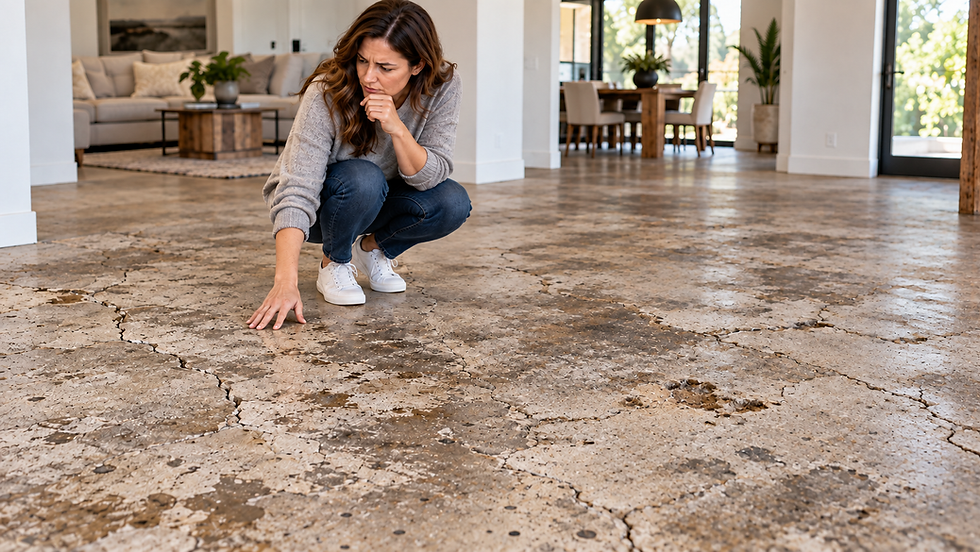
How Do You Remove Calcium Buildup from Natural Stone Pool Coping?


Removing calcium buildup on natural stone pool coping starts with identifying the stone and the deposit. Gentle cleaning can remove ordinary surface soil, but firmly bonded mineral crust may require professional removal and refinishing. The correct method must preserve the coping’s texture, edges, and finish.
The biggest mistake is reaching for an acidic calcium remover before confirming that it is safe for the stone. Travertine, limestone, and marble are calcium-based materials. A cleaner that dissolves calcium deposits can also attack the surface beneath them.
Before you scrub harder or try another product, determine whether you are dealing with removable buildup, moisture-related deposits, or damage to the stone itself.
Identify the White Buildup Before Choosing a Cleaner
White residue around a pool does not automatically confirm calcium scale. Several conditions can produce a pale appearance, and more than one may affect the same piece of coping.
Condition | What you may notice | What needs assessment |
Mineral scale | Raised, firmly attached crust or a band near repeated water exposure | Deposit composition and a compatible removal method |
Efflorescence | Loose white powder that may return after wetting and drying | Moisture carrying mineral salts through the installation |
Etching | Dullness, roughness, or a changed finish without a distinct raised deposit | Chemical damage to the stone surface |
The Natural Stone Institute’s stain-identification guidance explains that efflorescence develops when moisture transports mineral salts through stone and evaporates. Recurring deposits can require investigation of the moisture source. Remove Stains from Stone Applications
Look at Where the Deposits Appear
Photograph the coping while it is dry. Include close views of the residue and wider views showing the pool edge, nearby joints, and surrounding deck.
A band along the pool-facing edge warrants a different investigation from powder concentrated around joints. Residue near an irrigation spray pattern provides another useful clue.
These patterns help direct an inspection. They do not establish the mineral composition or prove that pool water is the only source. Avoid testing the residue with acid while it remains attached to an unidentified stone.
Why Stone Type Changes the Removal Method
A pool may combine several materials within inches of each other. Natural stone coping, ceramic waterline tile, grout, joint sealants, and metal fixtures can have different cleaning requirements.
A product suitable for one surface may damage another.
Travertine, Limestone, and Marble Require Acid Caution
Travertine and limestone have a calcium-carbonate base, as does marble. Their susceptibility to acids creates a difficult removal problem when calcium deposits adhere to them. Even mild acids can alter these materials. www.naturalstoneinstitute.org
Vinegar, lemon-based cleaners, muriatic acid, and many general calcium removers are poor choices for homeowner experimentation on these stones. The deposit may diminish while the coping becomes rougher, lighter, or uneven.
A honed or tumbled finish does not eliminate acid sensitivity. Damage may appear as changed texture rather than an obvious loss of shine.
Other Natural Stones Still Need Compatibility Checks
Do not assume that granite, quartzite, sandstone, or slate can tolerate any pool cleaner. Stone composition varies, and existing treatments and adjoining materials also matter.
The Natural Stone Institute’s care guidance cautions that even silicate-rich stones may contain acid-sensitive minerals. Confirm compatibility with the specific material before applying a chemical treatment. naturalstoneinstitute.org
Check installation invoices or ask the original supplier for the stone name. If records are unavailable, have the material assessed before attempting deposit removal.
Safe First Steps for Calcium Buildup on Natural Stone Pool Coping
Your first goal is to remove loose material and ordinary soil without changing the stone. That also makes the remaining problem easier to assess.
Document the condition. Photograph the dry coping and note whether residue returns after swimming, irrigation, rain, or another recurring event.
Confirm the material. Find the stone name and any available information about its finish, sealer, or coating.
Handle loose powder separately. If the residue appears consistent with efflorescence, collect it gently while dry. Repeated wetting can temporarily hide the powder without resolving its cause.
Choose a compatible routine cleaner. For surface soil, use a neutral cleaner approved for the identified stone and follow its label.
Test a small area. Use a soft cloth or other manufacturer-approved gentle tool. Remove cleaner residue as directed and evaluate the result after drying.
Stop at bonded crust. Do not escalate to stronger chemicals or harder abrasives simply because routine cleaning leaves mineral deposits behind.
Keep products and cleaning waste out of the pool, following the product’s handling and disposal instructions. Do not mix cleaning chemicals.
Routine Cleaning Has Limits
A neutral cleaner can remove ordinary dirt without necessarily dissolving established calcium scale. That does not mean the cleaner failed or that you need a stronger concentration.
Avoid improvising with pumice stones, wire brushes, sandpaper, or metal scrapers. Their effect depends on the stone and finish, and they can leave an altered patch.
Keep the names of products already used. That information helps a restorer distinguish remaining deposits from damage caused by earlier cleaning attempts.
When Professional Deposit Removal or Restoration Makes Sense
Professional assessment becomes useful when crust remains firmly attached after gentle cleaning, the stone type is uncertain, or a previous treatment changed the surface.
Other reasons to stop include crumbling edges, loose coping, deteriorated joints, and deposits that repeatedly return in the same location. These conditions may involve more than surface cleaning.
What a Professional Should Evaluate
An assessment should consider the stone, finish, deposit, previous treatments, and condition of surrounding joints. Where deposits extend onto waterline tile, the cleaning plan should distinguish the coping from the adjoining tile and grout. Olson’s tile and grout care services address those related surfaces.
Ask for a representative test area before committing to extensive treatment. The test should show both deposit reduction and any effect on the underlying stone.
Depending on the findings, treatment may involve compatible specialty cleaning, controlled mechanical removal, or refinishing. LATICRETE’s polished-travertine guidance specifically notes that mineral-deposit removal may require surface refinishing and recommends consulting a stone restoration professional. That guidance does not establish one method for every coping finish. cdn-global.laticrete.com
Discuss the Result and the Work Area
Before work begins, ask:
How will the pool and neighboring finishes be protected?
How will cleaning residue and debris be collected?
Will equipment create noise or require restricted access?
Could removal reveal existing surface damage?
Can the treated area reasonably match the surrounding texture?
When can you use the coping and pool again?
For professional natural stone restoration, the desired result should account for the coping’s existing finish and outdoor use. A glossy appearance is not an automatic restoration goal.
Reduce Recurring Deposits by Addressing Their Source
Cleaning improves the surface, but prevention depends on understanding why deposits formed. If the same crust returns, review both the water conditions and the installation.
Review Pool Water Balance and Repeated Wetting
Ask your pool professional to evaluate the water’s calcium-carbonate scaling tendency. Calcium hardness is only part of that assessment.
Palintest’s water-balance guidance explains that the Langelier Saturation Index considers pH, alkalinity, calcium hardness, dissolved solids, and temperature. These interacting conditions help indicate whether water tends to deposit or dissolve calcium carbonate. Palintest
Avoid changing pool chemistry based solely on the coping’s appearance. Provide current test results to the person responsible for maintaining the pool.
Also observe irrigation overspray, persistent dampness, and deposits around joints. Recurring efflorescence may require an installer or another qualified professional to investigate moisture movement.
Treat Sealing as a Separate Decision
An appropriate impregnating sealer can improve stain resistance, but it does not remove existing crust. It also does not correct water chemistry or an unresolved moisture source.
Ask whether your stone needs sealing and whether the proposed product suits the exterior application and existing finish. Do not apply a new treatment over an unexplained deposit.
For broader care beyond deposit removal, review Olson’s guide to maintaining natural stone around wet areas.
Remove the Buildup While Preserving the Pool Coping

To address calcium buildup, identify the stone and residue first, use compatible gentle cleaning for ordinary soil, and stop when firmly attached deposits require a different process. Acid-sensitive coping deserves particular care because removing the crust can also damage the stone.
Olson Marble & Stone Care serves San Jose and the Greater San Francisco Bay Area with natural stone restoration services. To discuss your coping, call (408) 930-6986 and provide photographs, the stone name if known, and details of previous cleaning or sealing. An assessment can help establish whether cleaning, refinishing, or further investigation makes sense.
Frequently Asked Questions
Can I use vinegar to remove calcium from travertine pool coping?
Do not use vinegar on travertine pool coping because its acidity can attack the calcium-based stone along with the deposit. Use a cleaner approved for travertine for routine soil, and seek professional assessment when mineral crust remains firmly attached.
How can I tell calcium scale from efflorescence?
Calcium scale may appear as an adherent crust, while efflorescence often appears as loose white powder associated with moisture moving through the installation. These are clues rather than a confirmed diagnosis, so recurring or firmly bonded deposits deserve assessment before treatment.
Can I pressure wash calcium buildup off natural stone coping?
Pressure washing is not a universal solution for bonded mineral deposits, and an unsuitable method can damage vulnerable stone or joints. Have the material, finish, and condition assessed before choosing equipment or attempting aggressive cleaning.
Will sealing pool coping prevent calcium deposits?
An appropriate impregnating sealer may improve stain resistance, but it does not guarantee prevention of calcium deposits. It cannot correct pool water balance or eliminate an underlying moisture problem, so sealing should follow a separate assessment of the stone and application.
Does calcium buildup mean my pool coping needs replacement?
Calcium buildup alone does not establish that the coping needs replacement, and cleaning or restoration may be appropriate after assessment. Loose pieces, crumbling stone, significant cracks, or installation problems require a separate evaluation before deciding whether restoration or replacement makes sense.